The Heart of Functional Living — The Floor Plan
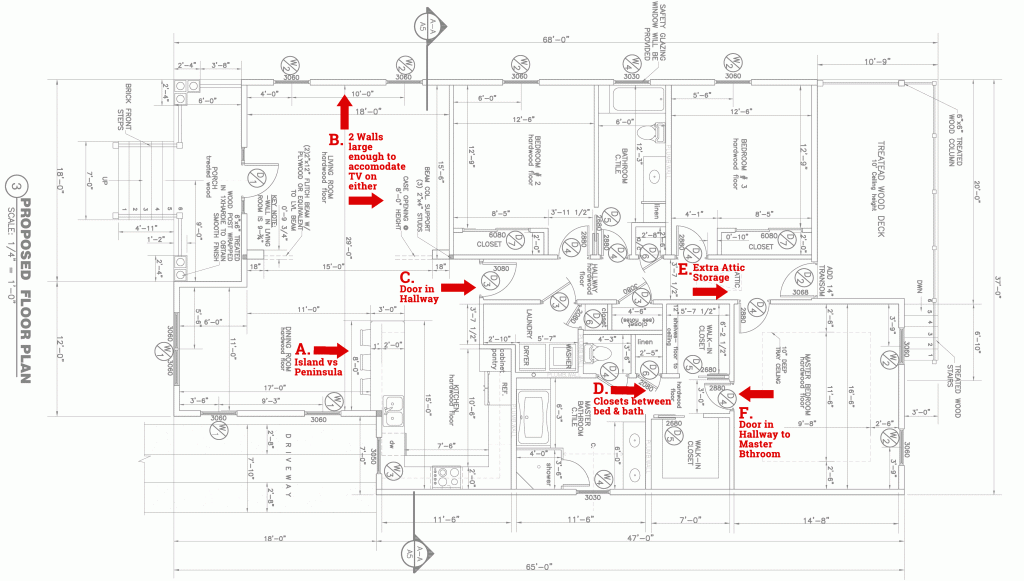
In my many years as a contractor, I’ve came to understand that “layout” is the most important element of a house. It’s the flow. The use of space. It’s the heart of functional living. I repeatedly told my clients that the floor plan design is the most important element of construction because it affects how well you live in a house.
If you are building a 6,000 sq ft. house on a few acres of land…well, there are very few layout problems, you can basically design whatever you want. But in New Orleans, with its narrow lots for new houses or the constraints of an existing house, there are always design challenges. For new houses, city zoning enforces front, rear and side setback requirements and they also require a driveway. These specifications limit and shape layout considerations.
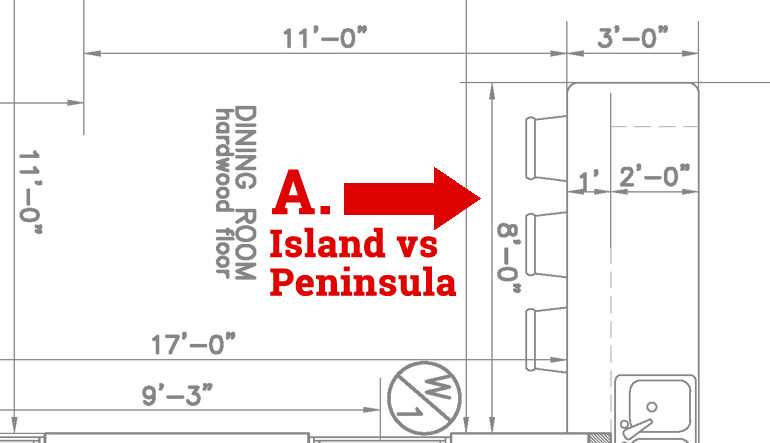
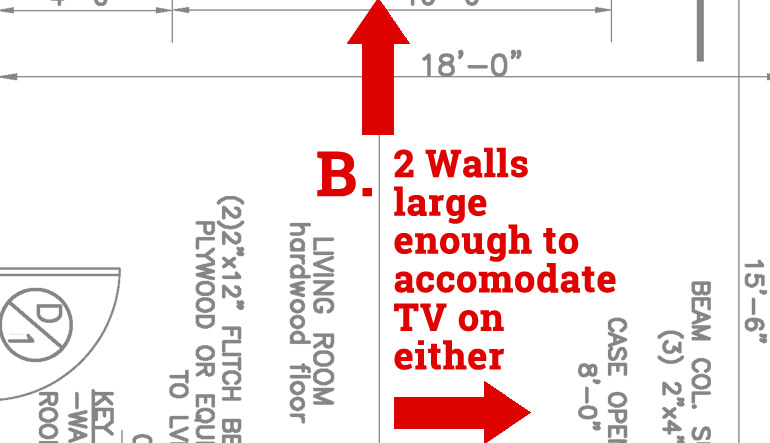
To say that creating a truly liveable and functional floor plan requires a great deal of thought is an understatement. I’ve spent hours and hours planning every floor plan that we do. I’ve looked at floor plans from others, toured open houses, measured multiple houses, talked with agents about what works and what doesn’t. Frankly, most of what I saw didn’t work very well: living rooms that couldn’t fit both a couch and an entertainment center well, islands that made kitchens too narrow to negotiate cooking space with another person (my pet peeve) and more.
I believe that, even with constraints, a perfect layout can be found. Our goal is to maximize Living Well every time!
Functional Layout Considerations
In the sample floor plan pictured above, letters indicate key layout decision points, detailed below:
Counter height. We choose counter height overhang rather than tall counters because you’ll feel more connected to those sitting around the peninsula when it is counter height. And as an added benefit, you can slide the green beans over to your guests for snapping help.
We even try to provide enough room in the living or dining room for a reading nook or placement of a large furniture piece.
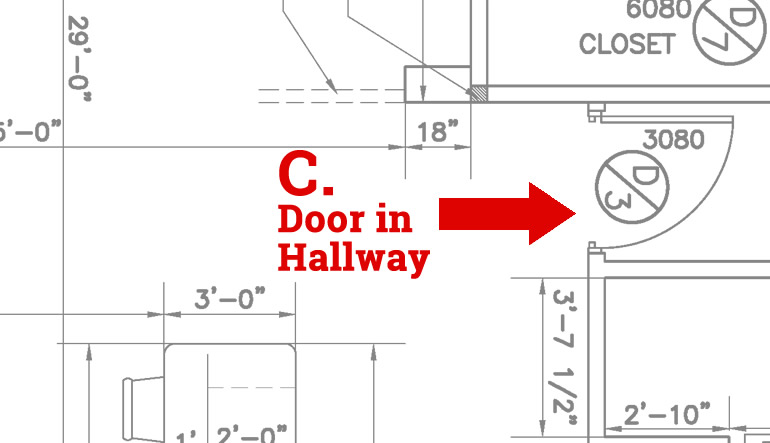
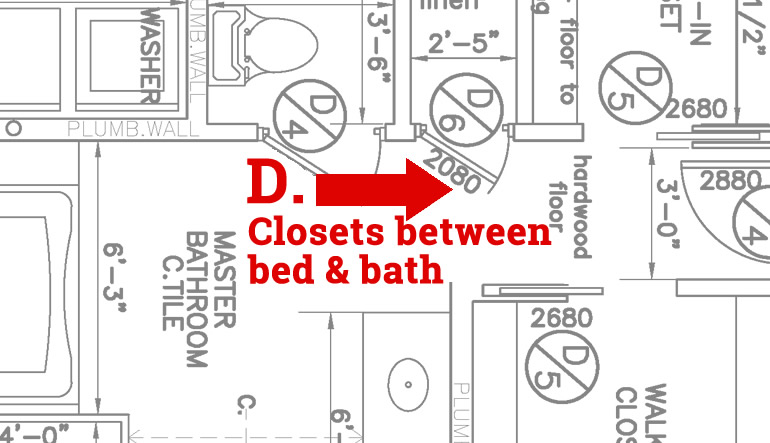
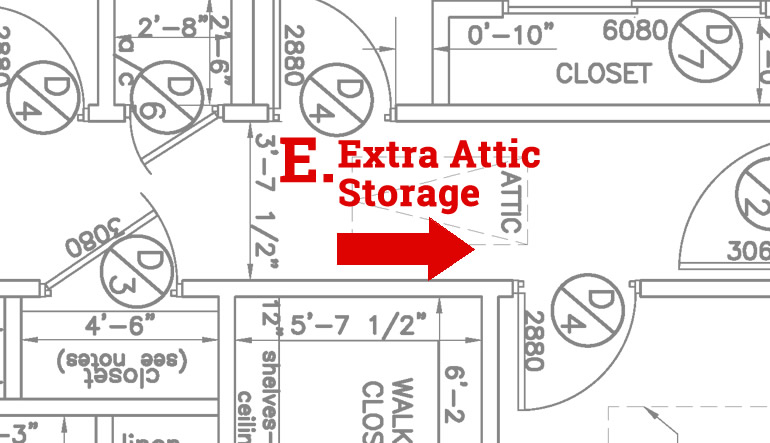
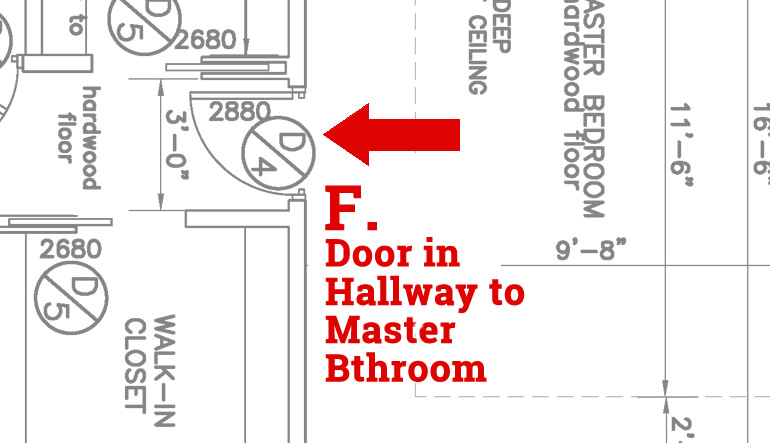
Other Layout Considerations
Bypass closet doors in the hall bedrooms. When there are swing doors in smaller bedrooms (the hall bedrooms), it limits furniture placement, because the doors swing out into the room. Bypass doors give you more floor space.