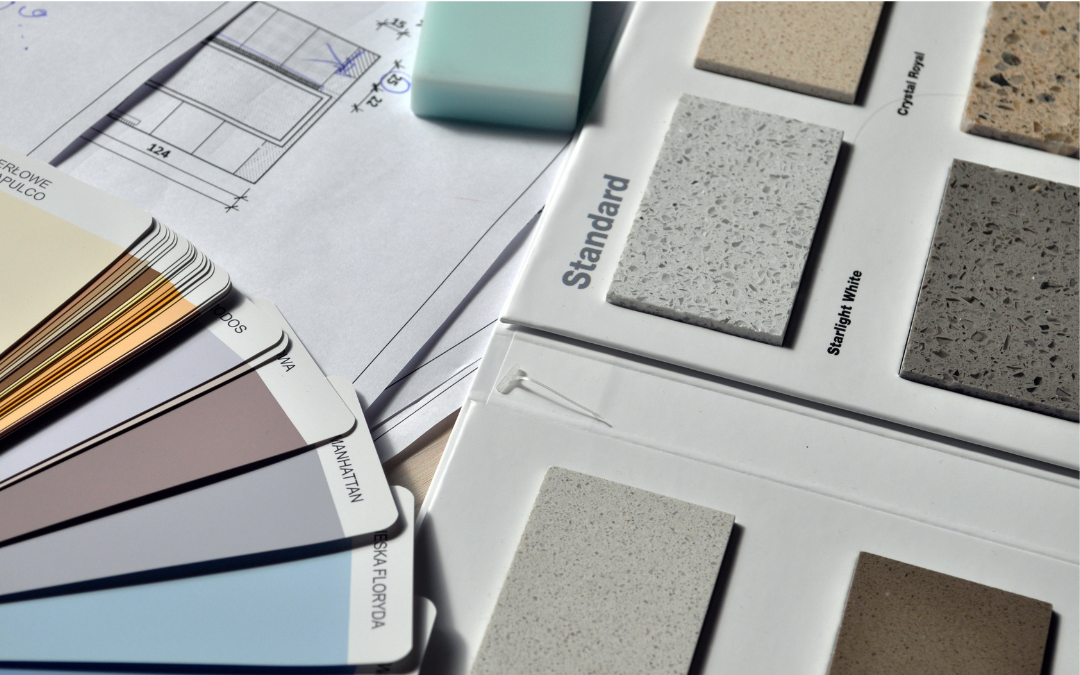
Most homeowners building a custom home spend hours scrolling photos online, falling in love with images of gorgeous kitchens and spa bathrooms. Then they walk into a big box store and start making selections. Or worse, they try online shopping. Here’s the hard truth: that approach will cost you—in time, in money and in missed opportunity. There’s an entire world of professional supply houses out there—the ones that builders, trades and developers all use. Most homeowners have no idea they exist, let alone how to use them strategically.
KEY TAKEAWAYS
- Professional supply houses are where builders, developers and the trades all shop for custom home materials—and as a homeowner, you can shop there too for your selections.
- The salespeople at professional supply houses are genuine design experts with years of product-specific knowledge and their guidance is free.
- Local building supply houses frequently match competitor prices and far outperform big box stores on expertise, product selection and service.
- For every visit to a supplier, go prepared—with plans, inspiration photos and the right questions—to turn it into a powerful custom home design session.
- Build a real relationship with your salesperson at every supplier. That connection will pay off in ways you haven’t anticipated yet.
The World You Didn’t Know Existed
You’ve heard of Home Depot and probably been to Floor and Decor. These are big box stores—the kind where you carry out the items you buy (or order at a pro desk if you have that set up). The knowledge varies wildly by employee, and the selections, while broad, tend to be middle-of-the-road.
Now, let me introduce you to professional supply houses. These are the places that furnish the residential construction industry with everything from flooring to roofing. Your builder uses them. Most all of the subcontractors have accounts there and know the salespeople by name. And here’s the part most owners miss: you can shop there too. You don’t need permission from your builder or anyone else. Just go.
Some professional suppliers are local only. Others are regional or national chains—Ferguson Plumbing Supply is a well-known example. Some carry a broad mix of items; Southland Plumbing in New Orleans, for instance, sells far more than just plumbing. ABC Supply (in New Orleans) started out with roofing and now carries a wide range of exterior products. Once you Google professional supply houses in your area, you’ll be surprised by what you find. Look at their websites to find out what they do sell, and group your shopping accordingly.
My personal preference—by far—is local suppliers. Their level of service and the depth of knowledge of their salespeople is typically outstanding. Plus, local suppliers are often price-competitive. Don’t assume you’ll pay more. Ask them to match a price and they just might do it.
The Insider Tip: Look for the Two Doors
Here’s something most homeowners won’t notice. Professional supply houses have two entrances: a showroom—the polished, beautifully staged side for homeowners—and a pro door, sometimes referred to as “will call” or “city desk.” It’s the working, no-frills side where contractors pick up orders. If the local supplier has a pro door (a door, not just a desk), you’re in the right place. It means you are at a professional supply house. Each side has their own set of salespeople, whose expertise varies. On the Pro side, it’s all about the installation items. So for electrical, that would be breaker panels, wire, conduit, outlets, switches, etc. On the Homeowner side, it’s the fixtures–fans, all light fixtures, outdoor lighting, speciality switches, etc.
And if you’re considering being your own general contractor? Poke your head in the pro door. Look around. Ask about setting up a contractor account. You don’t have to commit to anything yet—but that one conversation could open doors, literally, down the road. And…you can begin to get more comfortable being one of the pros!
The Salesperson Is Your Secret Weapon
I want you to really think about this for a moment. Imagine a person who has spent years (sometimes decades) specifying and selling one particular category of product for homes—kitchen and bath cabinetry, plumbing fixtures, roofing materials, lighting, tile. They have seen thousands of projects. They know what works and what doesn’t. That person is your salesperson at a professional supply house. And their expertise? It’s free.
Want to know everything about your cabinetry options before you commit to a single decision? Go sit down with the kitchen and bath designer at a professional supplier. They will walk you through:
- The best layout options for both function and design
- Cabinet style choices and how they align with your architectural direction
- The pros and cons of materials, finishes and construction quality levels
- Storage add-ins: pull-outs, organizers and specialty inserts
- Cost comparisons across every choice
- Computer-generated, to-scale layout diagrams and elevation drawings for every area that needs cabinetry—kitchen, bathrooms, mudrooms and more.
That last point is worth repeating. You can walk out of that meeting with professional drawings of your kitchen and bathrooms at no charge. That kind of free expert input is something investors and developers have been leveraging for years. Now you know about it too.
Choose Large Showrooms—See It in Real Life
One of the most common mistakes I see owners make is spending too much time selecting items solely from photos or online images. I get it—it’s convenient. But photos lie and scale gets distorted (in major ways). Colors shift under different light (in major ways). And the texture, the actual size and the feel of a space are lost entirely on a screen.
Especially for kitchens and baths, large showrooms have entire mock rooms set up with installed cabinets, countertops and fixtures. Bring a tape measure. Distances matter enormously in a kitchen—the distance from the refrigerator to the sink, the width of the aisle, the depth of the island. These are things you can only truly evaluate in person. Go walk it, feel it, measure and practice what your new kitchen or bath might feel like.
Use the internet later, for refining choices and comparing prices. But make your first meaningful encounter with the actual product, not a photograph.
Prepare Before You Walk in the Door
Going to a professional supply house without preparation is like showing up to an important meeting without an agenda. You’ll waste time—yours and theirs. Here’s how to get maximum value from every visit:
- Call ahead and ask for the most experienced salesperson and/or designer. In most cases, they are the same person. Then schedule a morning appointment with them, when you’re fresh and focused (if they make appts). These professionals are busy and in demand. Do not go on a Saturday, if you can help it.
- Do your visual homework first. View enough photos online so you have a solid sense of what you like—and equally important, what you don’t. Bring those photos to the meeting( on your phone or laptop). Showing is far more efficient than describing.
- Learn the basic terminology ahead of time. If you’re shopping for doors, look up the parts of a door—what are jambs, sills, panels and casing. Don’t use your expert’s time to teach you vocabulary.
- Go prepared:
- Bring your plans and specifications if you have them.
- Bring inspiration photos and any quotes already received from other suppliers. In some instances, other shopping needs to have been done beforehand. Kitchen cabinets, for example, are best decided after you’ve chosen appliances (bring those quotes with the sizes) and, possibly, countertop choice.
- If there is more than one decision-maker, both should go, along with any designer you are working closely with.
- Avoid distractions: leave the kids elsewhere (lol), stay off your phone, allow plenty of time.
- Bring a tape measure (practice using it if it’s new to you). A clipboard with paper is my preference for quick drawings and notes.
Your 4 Goals at Every Supplier Visit
Work toward four specific outcomes. Don’t leave without them—or at least without the promise that they’ll be sent to you.
Goal 1: Get a Written Quote. Get a written price quote for everything you’re considering at that supplier. If the quantity hasn’t been determined yet, have them quote a single unit. For ceramic tile flooring, the quote might read: “18×18, Gold Standard Porcelain, Item #6707, $2.19 each.” The specific item number and pricing in writing matters—otherwise critical details get lost. Put it in the plans and specs for bidding.
Goal 2: Get Cut Sheets and Spec Sheets. These are the installation instructions for the trades. Ask for them at every visit. Some salespeople will point you to the manufacturer’s website—that’s fine, just download them yourself and put them in the plans and specs for bidding. It may feel like you’re doing someone else’s job, but those spec sheets prevent errors, eliminate assumptions and make the installation process smoother. They can save you real money.
Goal 3: Get Measurements, Samples, and Photos. A picture is worth a thousand words—and a physical sample is worth even more. Print or download brochure photos of your selections, with dimensions, for items like appliances. Get actual samples for tile, stone and flooring wherever possible. Give one set to your builder and keep one for yourself to bring to other supplier meetings. Everyone working from the same information is a very good thing.
Goal 4: Get Layout and Elevation Diagrams. When applicable—especially for cabinetry and bathrooms—ask your salesperson for design drawings before you leave. You can always refine them later, if you change your mind. But having those to-scale diagrams is an invaluable tool for your own vision, and for the builder and trades who will execute it. Remember that #1 tip about how important it is to have your choices correct on the house plans? This is how it’s done. Hand those diagrams to your architect.
Build the Relationship—It Will Pay Off
Here’s a smart move that most owners skip: build genuine relationships with your salespeople.
When you walk out of that first meeting, send a thank-you email the same day. Thank them. Mention something personal from your conversation—“Hope your son gets good news about his college application”—or whatever the genuine moment was. The goal isn’t flattery. The goal is to become a real person to them, someone they remember and want to help. Their days (and years) are spent working with the public, so standing out in a unique way makes sense. So does gratitude. People love it when their efforts are appreciated.
Here’s why the same-day email matters: you’ve just gotten past their spam filter and established a thread. When you email them again later in the project with questions, use that same thread. Two reasons: deliverability, and recognition. They’ll see the thread and immediately know exactly who you are.
The connection is also very practical. Later in your project—when you have a question, when something goes sideways, when you need a referral in a hurry—you want to reach a person who knows your name and picks up. I cannot tell you how many times a relationship I had built paid off in ways I hadn’t anticipated. I once had a floor installer bail on me mid-project. I called my tile salesperson. Karen gave me someone great—even though she wasn’t technically supposed to. That’s what relationships get you.
Pro Tip: How to Get Real Referrals
If you simply ask a salesperson for builder or trade contractor recommendations, they’ll hand you a printed list. Supply houses have that policy—they don’t want liability for anyone on that list. But here’s a smarter approach: on your second visit, ask your salesperson directly, “If you were building your own house, who would you use for a builder?” That’s a personal question and you’re far more likely to get an honest, meaningful answer. The same works for subcontractors—the salespeople aligned with specific trades often know exactly who is excellent in the field.
One More Thing
My honest confession: one of the reasons I want you shopping at professional supply houses is that it builds your confidence. Real confidence in the home building process comes from experience—from getting into the rooms, touching the materials, talking to the experts and realizing that you understand more than you thought.
Everyone has felt the momentum that comes from rolling up your sleeves and getting started on something new. This is your version of that. So start. Go find your local suppliers. Make an appointment. Walk in prepared. Those visits can change how you see the entire process—from something overwhelming to something entirely doable.
And you do NOT have to wait for your builder to tell you. As a matter of fact, that is the worst time to start shopping. Waiting until after construction starts is awful timing. If you’re ready to go deeper on making your selections the right way—ahead of schedule and built into your plans from the start—check this out: How to Make All of Your Home Selections
Wish You the Best,
Julie
You’ve got this and I’ve got your back!
Remember:
- Find your perfect team (banker, designer, architect, builder) who share both your vision and how you want it done.
- Trust your gut instincts.
- Acquire the right knowledge, at the right time.
- Successfully build your dream, on time and on budget.

HelpBuildYourDreamHome.com