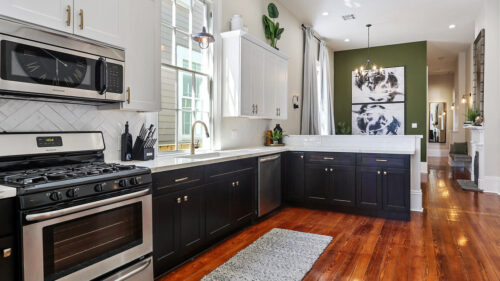
Perhaps I should say: What a homeowner truly wants for their kitchen layout should drive the design decisions for the entire house. The kitchen is the heart of the house and should be treated as such during design. Meaning, it comes first. Find out what you really want in your kitchen layout, then design the rest of the house to fit that. Often, that’s not the case. At the very least, know your options. This article is meant to illuminate the options of kitchen layout and how it might impact the rest of the house.
KEY TAKEAWAYS
- The kitchen is the heart of your home-design it first, then build the floor plan around it.
- “Open concept” can quietly rob you of having enough cabinets, ample counters and a workable space for food prep.
- Why not get both? Open concept and a workable layout can both be had, if designed right.
- Meet with a kitchen designer before having your house plans done!
The classic kitchen layout for decades has been the U-shaped kitchen with 3 walls. Within that kitchen, the ‘working triangle’ can easily be incorporated. This design concept has stood the test of time for good reason, because it works.
A “working triangle” in a kitchen refers to the imaginary triangle formed by the three main work areas: the sink, refrigerator, and stove, where the idea is to position these appliances close enough together to minimize movement and optimize workflow while cooking, essentially creating an efficient layout for preparing meals.
Key points about the kitchen work triangle distances:
- Each side length: 4 – 9 feet
- Total perimeter: 13 – 26 feet
- No obstructions: Ensure there are no obstacles (like cabinets or island) to the traffic flow directly through the triangle .
So…you want an open concept floor plan?
In recent years, the open floor plan concept emerged where the living, dining and kitchen areas are open, with only arches, partial walls or peninsulas dividing the spaces. Next on the horizon was what I refer to as the ‘super open floor plan,’ where there are no wall divisions to the living spaces.
This change significantly impacted the kitchen layout, because it involved the absence of the third wall, and in certain instances, even two walls are missing.
In the classic U-shape, there are 3 walls on which to place the main appliances of the ‘triangle workspace’: refrigerator, sink and stove. 3 walls also allow for more cabinetry, other appliances and the subsequent increase in countertop area. Counter space is all important for the household chef or busy parent.
Most of the floor plans that I see (when looking online) are the super open kind and only have 2 walls available for the kitchen (some only 1 or 1.5 walls).
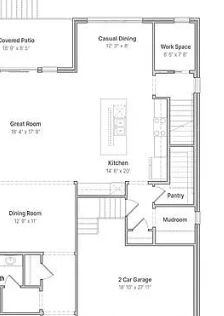
Commonly, newer designs have 2 passageways through the kitchen, as shown in the screenshot below. Effectively these walkthroughs remove cabinets and counter space. They also increase distances between walls that have cabinets and appliances installed on them. In the example below, the passageways add an additional 7′-7″ to the overall width of the kitchen. While there are 3 walls in the screenshot for the kitchen, the distance is now so big that a true working triangle cannot be done.
In the example below, the passageways add an additional 7′-7″ to the overall width of the kitchen. While there are 3 walls in the screenshot for the kitchen, the distance is now so big (wide) that a true working triangle cannot be done.
Plus the overall width is what I consider cumbersome. Personally, walking almost 17 ft from the sink to the refrigerator (34 ft round trip) is not comfortable and I would not enjoy working in a kitchen that is this wide. Some people are ok with that distance. What might look fine on paper (well, digital blueprint), it may be not what you really wanted once it gets built.
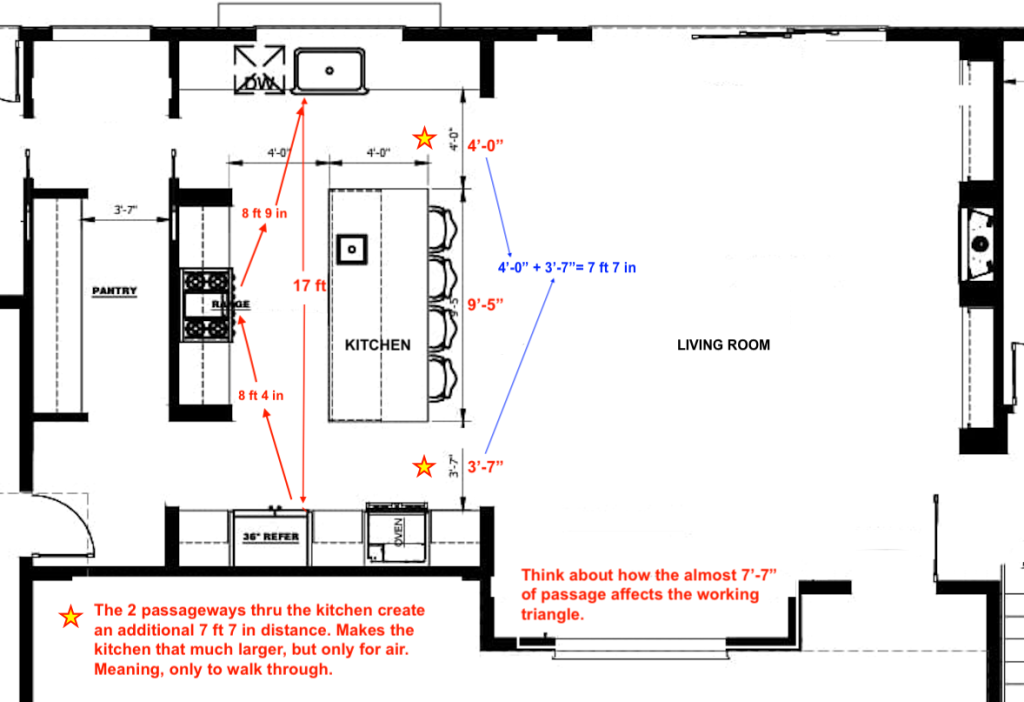
My advice-get to know what you like and what you just absolutely don’t want.. Get a tape measure and play with distances in your kitchen. You might be amazed how far 17 ft really is (and on some plans online, I’ve seen that distance at 23 ft!). Pretend that you are prepping food at the sink and need to wash lettuce. Walk over to the refrigerator, then walk back to the sink. Whoops, forgot an item that needs to go on the stove. Do it again. Then walk the same thing again going a little further out. Walk another 3 feet, another 5 feet. At some point, you’re not going to like the distance.
The important point is for you to know what you want (or don’t want) regarding the kitchen-the distances, the layout, counter area (is it enough?), cabinets, appliances. Once you’ve explored kitchen design and are aware of the options, THEN you’ll know your preferences. That leads to you being in charge of the overall design process. Imagine showing up at an architect’s office well informed about your preferences for the kitchen (and all other spaces). You are far more likely to end up with a floor plan that is right for you and your family.
I’m not sure exactly why the super open concept developed and whether homeowners (who are building custom homes) are even aware of the trend, and its impact on your kitchen space. Please know that passageways DO NOT have to go through the kitchen, as there are many other perfectly good ways to lay out the flow of a house!
KEY CONCERN (about open floor plans)
If you don’t know what you want in this regard, then during design meetings, the architect may ask about whether you prefer an open concept floor plan (without discussing the impact on key rooms). You might respond with a casual ‘yes, of course’ because that’s what everyone has and you like the look. The architect (with a possible bias toward the super open version) begins to draw. Along the way, you say yes to other items like a passageway through your kitchen from the side entrance and garage. How wonderful because you can carry groceries straight in. Then a yes to other passageways/halls. The kitchen now has passageways to adjoining rooms on one side and complete openness to the living room on the other side. Beautiful layout.
However, the design comes with a BIG compromise in the layout of the kitchen itself. Your simple ‘yes’ answers have now affected your future kitchen due to the number of walls and the distances, which might NOT allow for your future kitchen layout to be what you truly want.
Here’s what happened. The architect drew the open floor plan with the passageways as the driver of the overall layout. The kitchen ended up (by default) with only 2 walls or wide passageways like the diagram above that widen the kitchen itself. Then the architect placed a stove, microwave, refrigerator and sink in the drawings, with cabinets to accommodate them. You now have your kitchen. Voilà, you have your kitchen! An oversimplification but essentially true.
HOWEVER, what I just described is that the architect planned the layout, distances and location of your kitchen, based on your choice of the openness of the floor plan and his or her decisions about passageways. Is it what you want in a kitchen? You honestly will not know until you shop for all things kitchen and make your own choices.
The goal of this document is for you to become familiar with what open floor plans look like, both in a drawing and in the real world (via photos). And the resultant number of walls in a kitchen and how those impact the kitchen itself–from the number of cabinets, how the appliances are positioned, the amount of countertop space, etc.
These concepts will make much more sense once you sit down with a kitchen designer. My strong recommendation is to sit down with a designer/salespeople at the local, professional kitchen and bath supplier, who use computer programs to help design your kitchen. You can leave there with a printed, to scale diagram of your layout and elevations for each wall in the kitchen. It’s usually free!
Side note. Also consider whether you actually want a super open floor plan. Personally, I don’t care for them. My favorite house was a remodel that I did for myself. I went all out and included a 12 ft island! The kitchen was separated from the living area by a large archway. From my experience, the folks hanging out in the kitchen were busy with their activities, while those in the living room had a different vibe going, perhaps watching a ball game or something similar. Despite the distinct activities, the space remained open enough to feel connected to each other yet also private. I prefer a partial separation.
Here are some visuals to help you see how the plans are affected by the number of walls and how open floor plans CAN be achieved with 3 wall kitchens. As you view the illustrations, notice the amount of counter space with its associated cabinetry (meaning more storage). Notice the openness or connectedness of the living and dining areas. Think about how you cook, use your home and what you really want.
DRAWINGS OF FLOOR PLANS
Classic U-shaped (3 wall) with no passage through
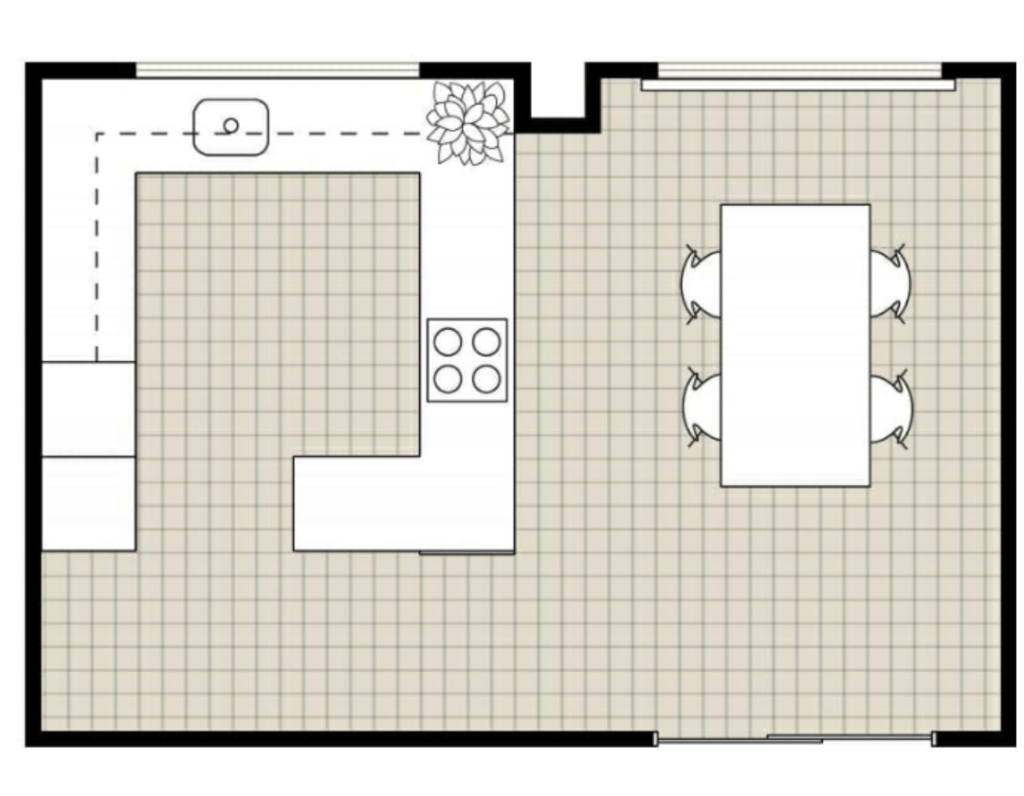
U-shaped (3 wall) with a passageway
There is a passageway through (door going through a closet, possibly pantry to probably the garage or side entrance). Notice how passageways remove cabinetry and counter space.
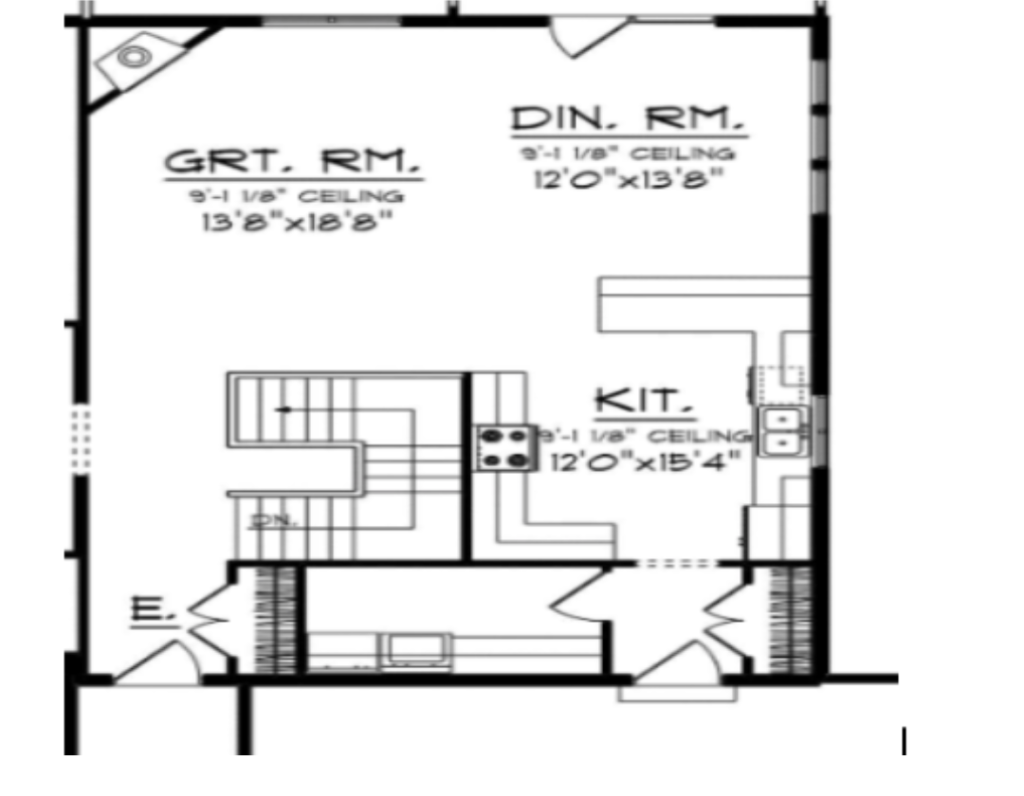
2 wall kitchen layout, with no passage through
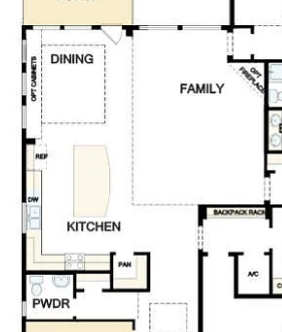
2 wall kitchen layout with passageway
PHOTOS SHOWING OPEN FLOOR PLANS
There are many ways to achieve openness, using anywhere from 1 to 4 walls or peninsulas.
Picture yourself using the kitchen! What’s the triangle like, walking from sink to stove to refrigerator. Where are you prepping food? Is there enough counter space next to the sink (where food prep occurs)?
Do you have space in your house for the kitchen size shown? Example, you might love this first picture because it is the super open one but that’s a very big kitchen.
2 wall kitchen floor plan layout
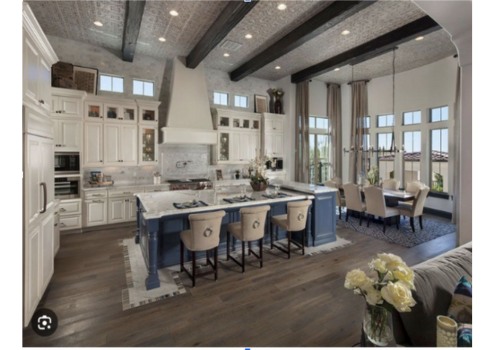
3 WALL KITCHEN LAYOUTS
Notice how some have passageways with doors and some do not. It’s something to think about when designing your kitchen and how it connects to the rest of the house.
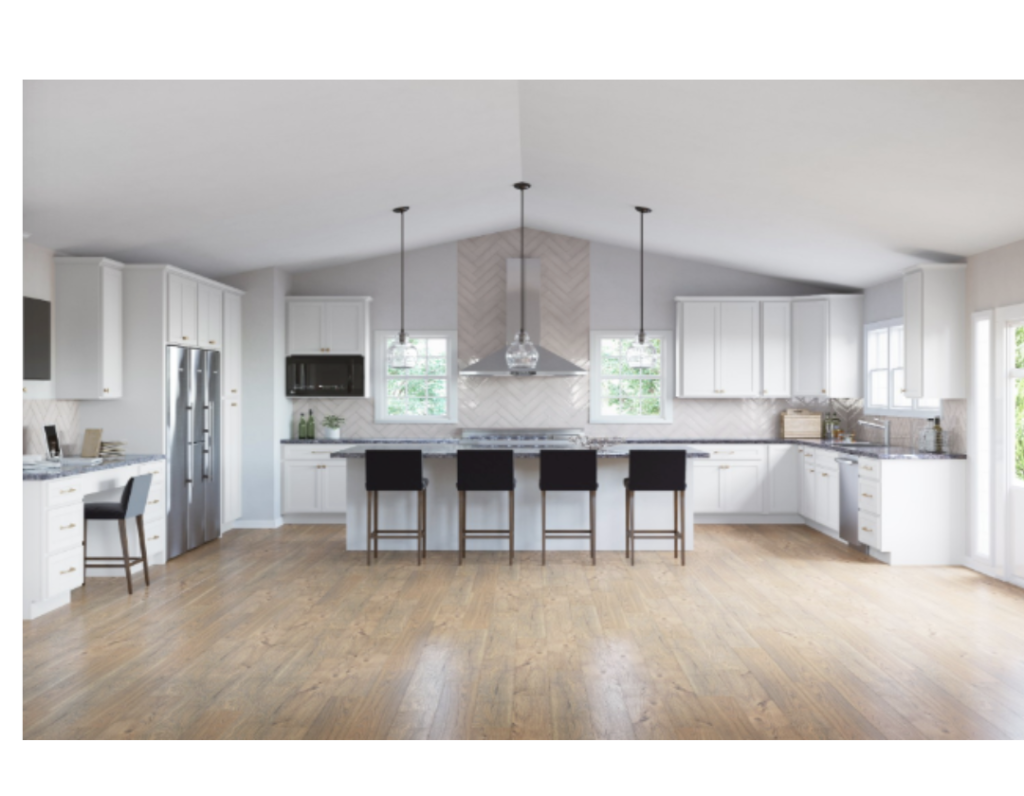
Notice placement of the appliances, especially the sink and microwave. Take a look at how the 3-wall kitchens have significantly more cabinets and countertop space. More ability to place wall ovens, microwaves in upper cabinets, wine coolers, ice makers, etc. The ability to have a good workable work triangle is there.
3 wall kitchen with open concept floor plan
Sink not on the island. Long distance between sink and refrigerator and mw. Microwave in upper cabinet.
3 wall kitchen, with a passageway
Workable distances between stove, cooktop (end of island), sink and refrigerator. Cabinet contains a wall oven/microwave combo (though it looks like it is set a little low).
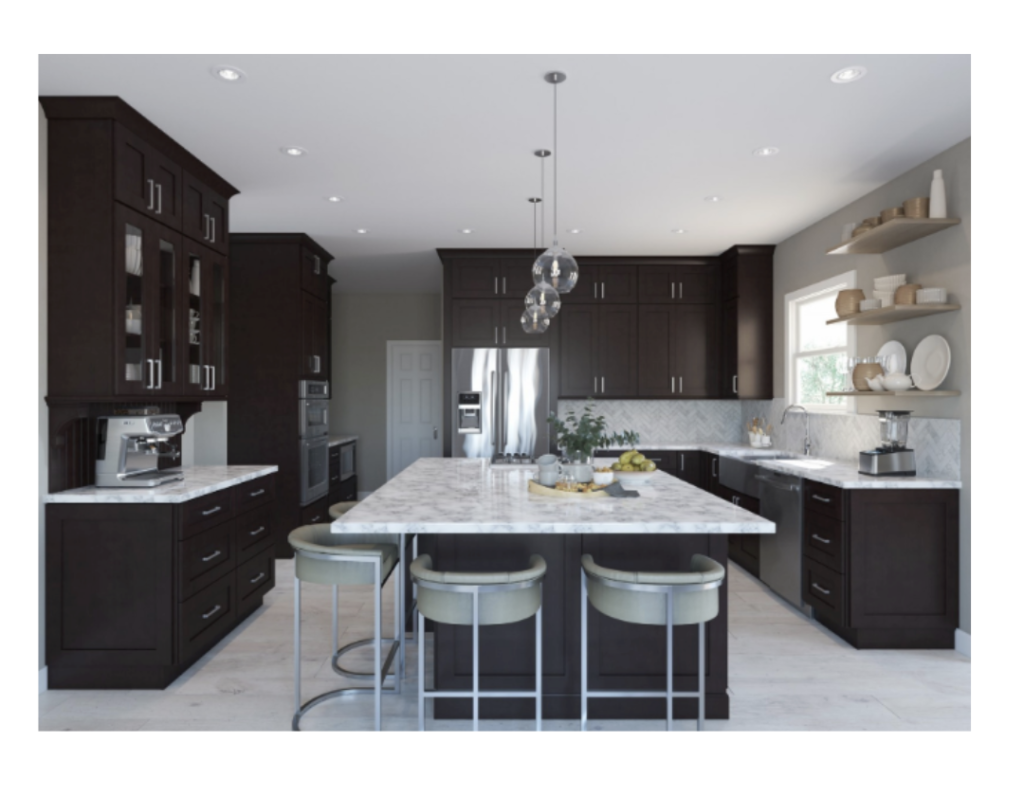
3.5 wall (sort of)-peninsula creates room for counter and cabinets
Pantry cabinet to the left of refrigerator. Medium to long distance between sink and refrigerator.
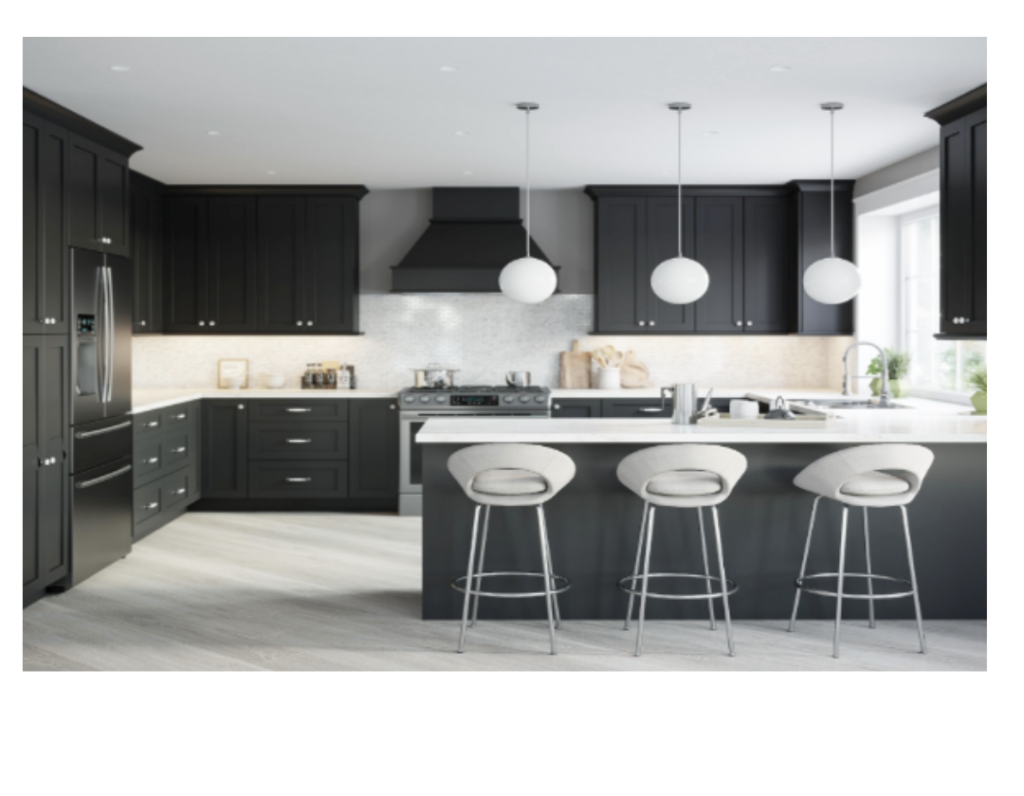
Angled peninsulas
These can be a viable option, with bar height counter (hides sink mess from the living area)
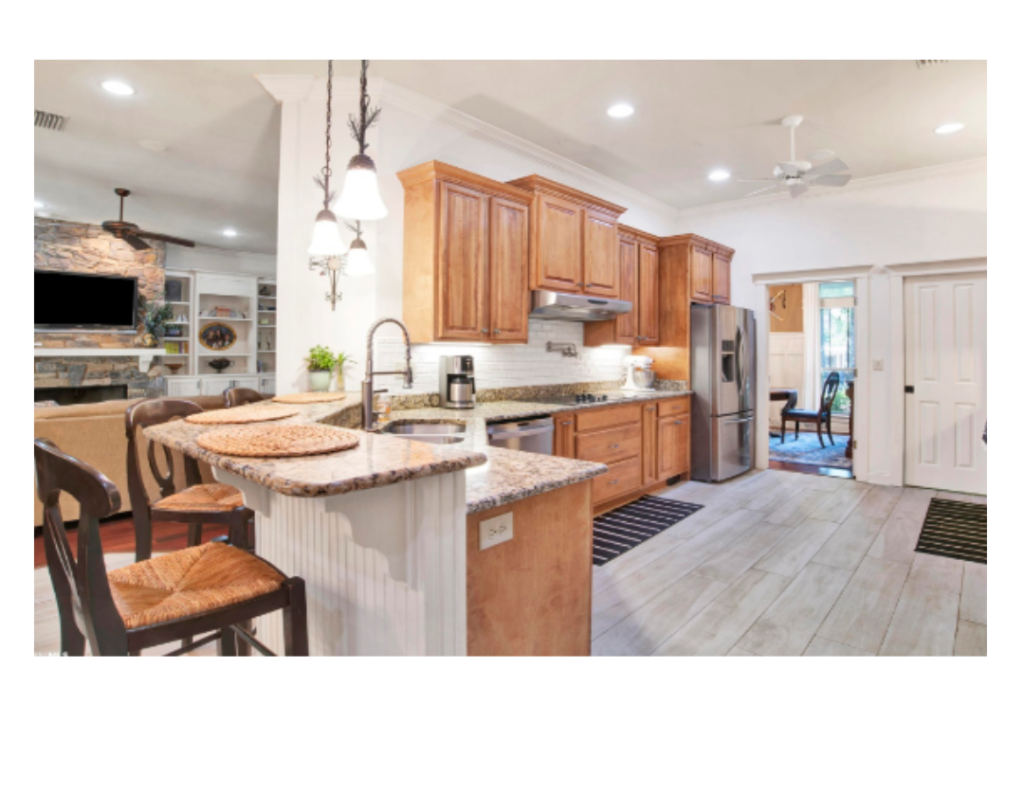
2 WALL KITCHENS
Sink in island
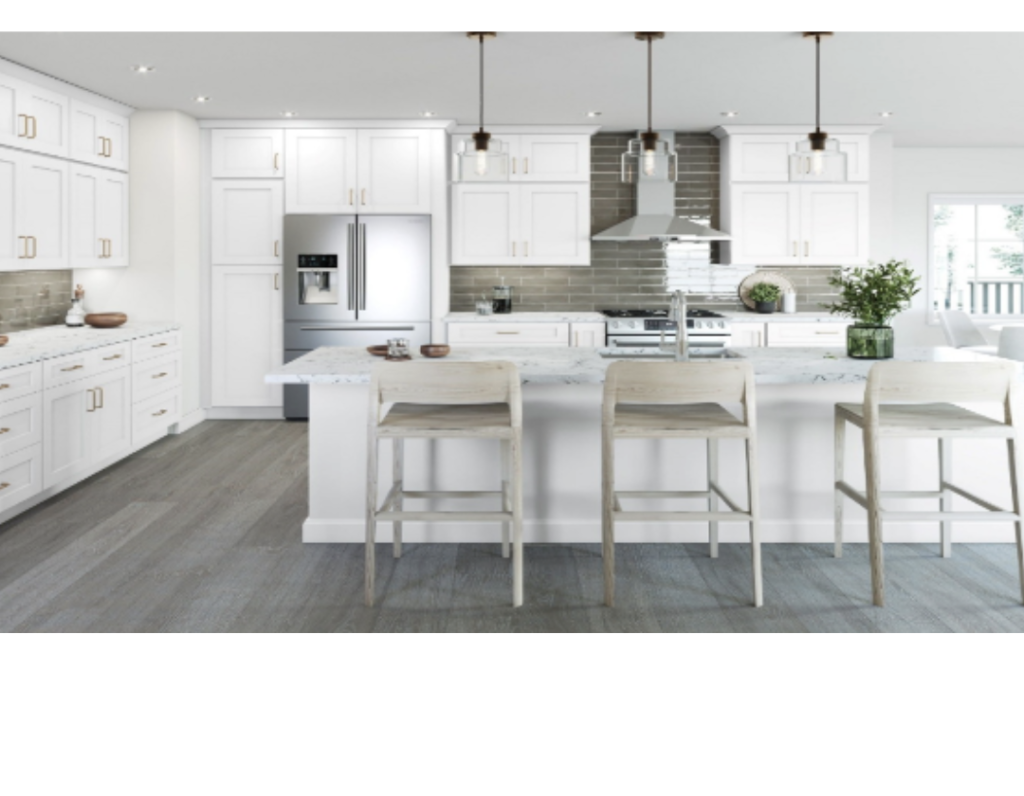
1 WALL KITCHEN-galley style
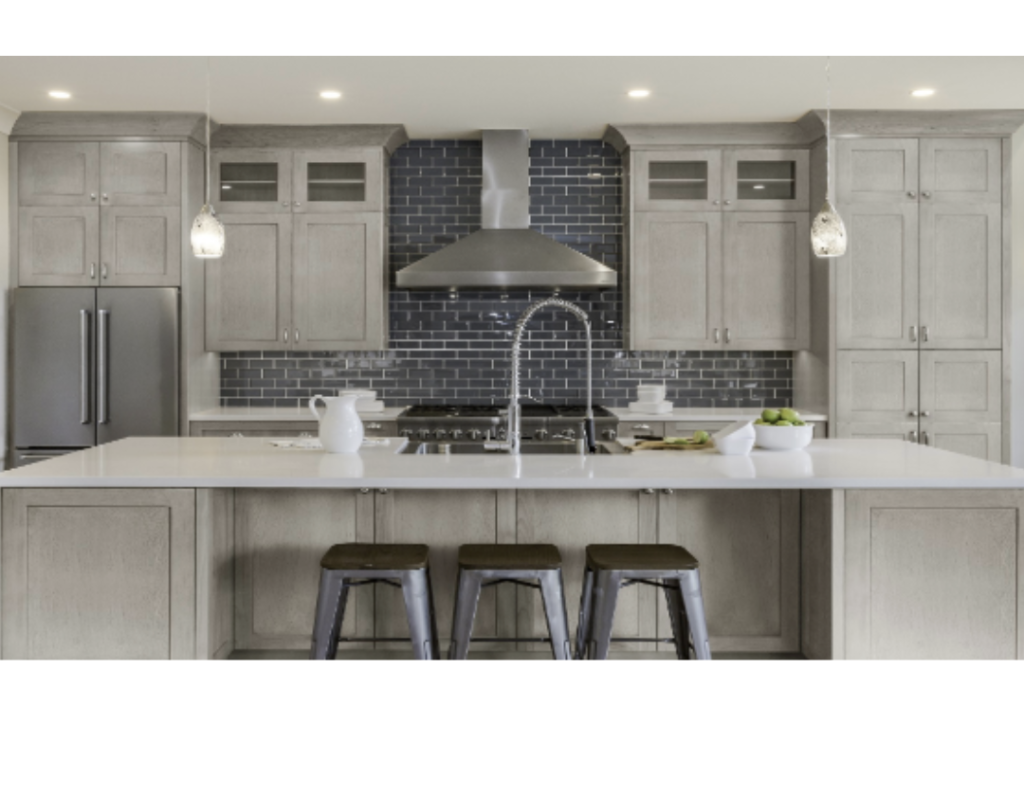
1 WALL KITCHEN
Huge island! (2nd wall could be off to right, not seen in photo)
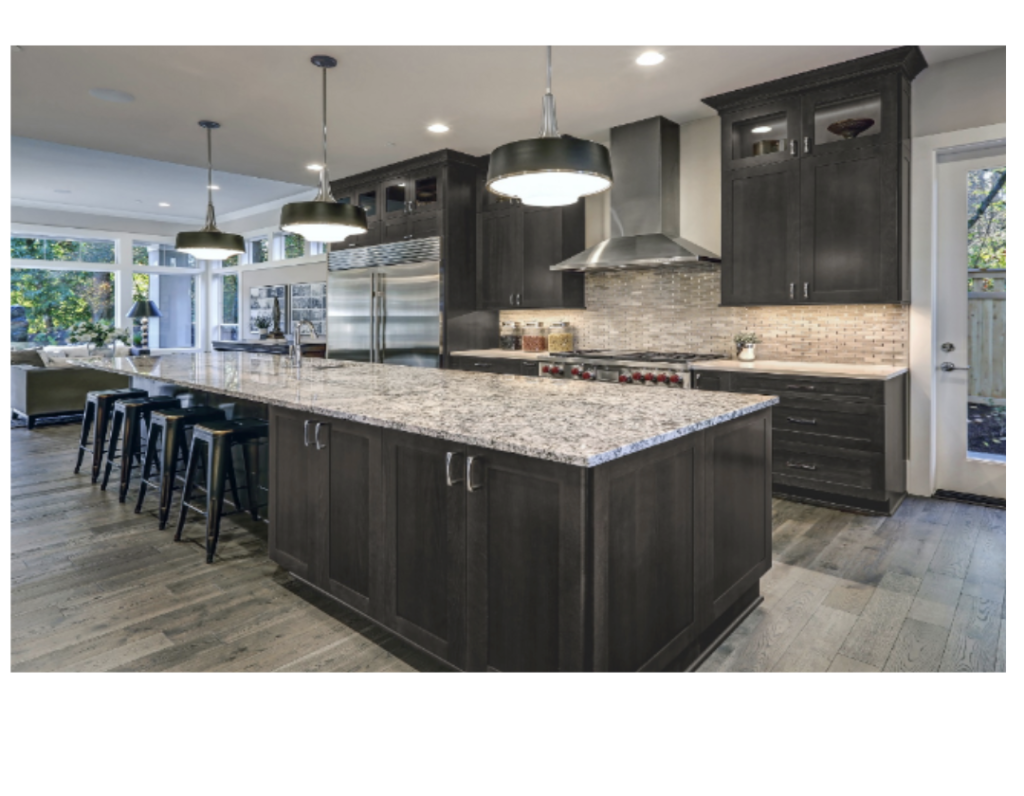
ALSO–The decision whether or not to have seating in the kitchen is a major one:
Wish You the Best, Julie Remember: 
You’ve got this and I’ve got your back!

HelpBuildYourDreamHome.com